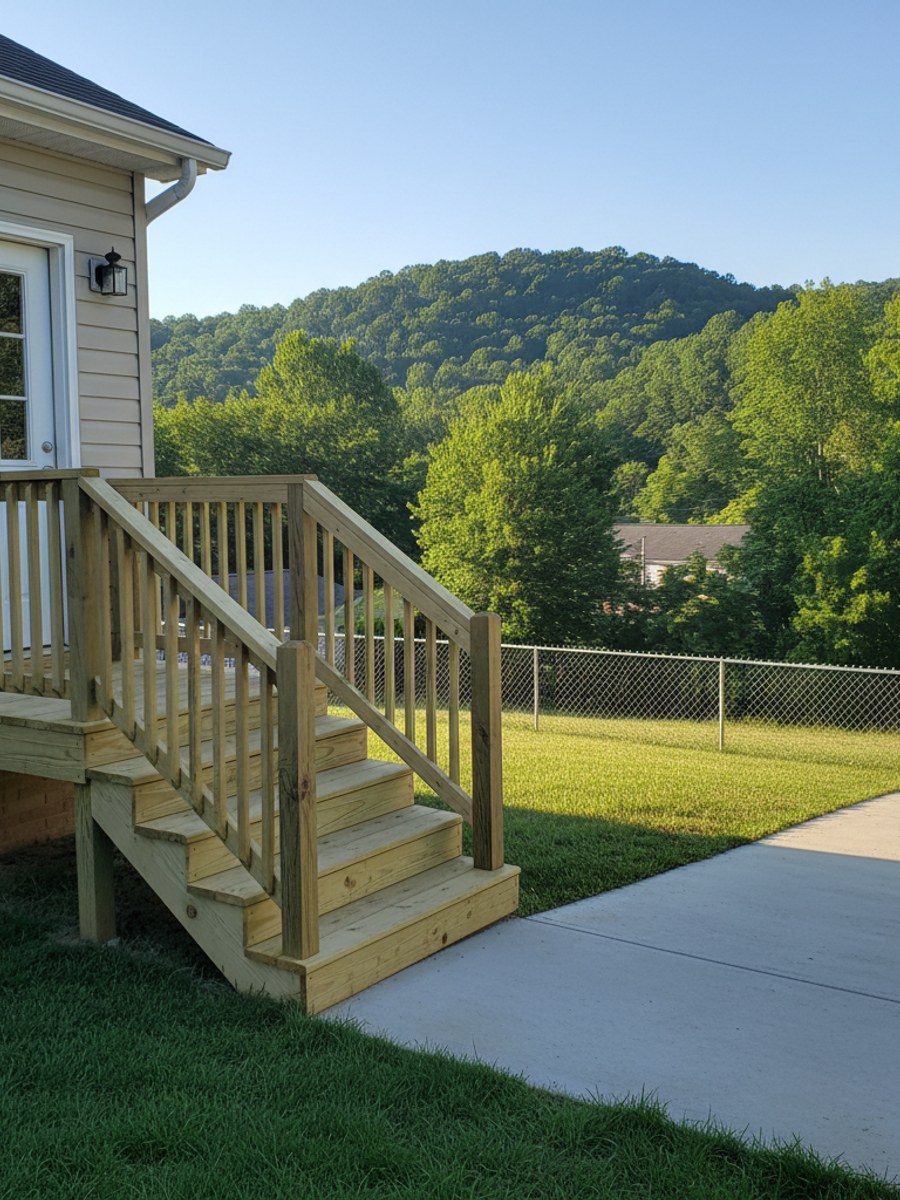
Most deck problems get decided before the first board goes down. The framing is hidden once the decking's on, so if the footings are too shallow or the ledger's flashed wrong, nobody sees it until the deck starts to sag or the house siding behind it rots out. Here's what's worth looking at before anyone starts digging in your yard.
Start With What's Under the Deck
Bartlett sits on that silty loam over clay that's common across West Tennessee. It drains fine when it's dry, but it holds water and swells after a wet week, which is a problem for anything resting on it. A deck footing that isn't poured deep enough, or isn't wide enough at the bottom, can heave a little every winter and settle a little every summer. Over a few years that shows up as a deck that's slightly out of level, doors that stick on the attached porch, or a railing post that's started to lean.
Frost depth around here is usually figured around 12 inches, shallower than you'd see up north, but local building code still sets a minimum footing depth and most inspectors want to see the footing bear on undisturbed soil, not fill dirt. If your lot has been graded or had drainage work done at some point, ask where that undisturbed layer actually is before the holes get dug.
How the Deck Attaches to Your House
The ledger board is the single most important piece of a deck and the easiest one to get wrong. It bolts to your house's rim joist and carries a big share of the deck's weight. It needs lag screws or through-bolts, not nails, and it needs flashing above it that tucks under your house wrap or siding so water runs over the top of the ledger instead of behind it. A lot of deck failures you hear about start right here, not with the footings at all, because wood against wood with no flashing just sits wet after every rain and rots from the inside where you can't see it.
On older Bartlett homes with brick veneer, the ledger attachment gets trickier, since you can't always bolt straight through brick the same way you would through wood siding or vinyl. That's a detail worth asking about before you get a bid, not after.
Permits, Setbacks, and the HOA Down the Street
The City of Bartlett requires a building permit for deck construction, and inspections generally happen at two points: after the footings are dug and before they're poured, and again at framing before the decking goes on. If your property is outside city limits but still in the surrounding area, Shelby County handles it instead. Either way, don't skip it. An unpermitted deck can turn into a real headache when you go to sell the house and the buyer's inspector asks for the permit record.
Setbacks matter too. Most lots have a minimum distance the deck has to stay from the property line, and if you're anywhere near an easement or a utility line, that gets checked. A lot of the newer subdivisions around Bartlett also have an HOA, and HOAs commonly have their own rules about deck height, railing style, or even stain color, separate from whatever the city requires. Check both before you commit to a design.
Material Choices That Matter More Than They Look
Pressure-treated southern yellow pine is still the standard for framing here, and it's a fine choice as long as the lumber is reasonably dry before it's installed, not fresh off the truck and still green. Wet treated lumber shrinks as it dries, and if it's fastened tight while wet, you'll see gaps open up or boards cup within the first year.
For decking itself, you're choosing between wood and composite, and that choice changes other details. Composite boards expand and contract with temperature more than wood does, so the gap between boards has to account for that, usually around 1/8 to 3/16 inch depending on the brand and the weather at install. Fasteners matter more than people expect, too. Standard steel screws will streak and corrode within a couple seasons against treated lumber's chemicals. Coated or stainless fasteners cost more up front and save you rust stains later.
Water, Grading, and What a Heavy Spring Does
Bartlett gets a real wet stretch most springs, and a deck changes how water moves across your yard whether you plan for it or not. If the ground under the deck doesn't slope away from the house, water pools there and stays damp for days after a storm instead of draining off. That dampness is exactly what rots framing from underneath and what draws termites, which are common enough in this area that it's worth asking your builder how they're treating or at least inspecting the wood over time.
Downspouts are another thing people forget to deal with. If a gutter downspout dumps right where the new deck footings are going, that corner of the yard is going to stay wetter than the rest, which isn't ideal for a footing bearing on clay-heavy soil. Sometimes the fix is as simple as running the downspout a few more feet away before construction starts.
Railings, Height, and What Code Actually Requires
Any deck more than 30 inches off the ground generally needs a railing, and that railing typically has to be at least 36 inches tall for a residential deck, closer to 42 for some commercial or multi-family situations. Baluster spacing is checked too, usually so a 4-inch sphere can't pass between them, which is the rule meant to keep small kids from slipping through. If you're resurfacing or rebuilding an older deck, don't assume the existing railing meets current code just because it's been standing for twenty years. A lot of older Bartlett decks were built before some of these spacing rules were tightened up.
If you're doing a repair or a rebuild rather than new construction, it's also worth having someone check the existing framing while it's exposed. Sometimes a deck that looks fine from the surface has joists that have been sistered with the wrong fasteners, or a beam that's undersized for the span it's carrying. You don't find that out until the old decking comes off.
None of this is complicated, but it's the kind of thing that's expensive to fix after the fact and cheap to get right the first time. If you want someone to walk your yard and look at the soil, the ledger, and the drainage before anything gets dug, that's the first conversation we have on every project at Bartlett Deck Co.